
On grief
Absurdism doesn't promise that your person is in a better place. It doesn't promise you'll see them again. It doesn't promise the pain has a purpose.
What it says is this: the love was real. It happened in a universe that didn't require it, which makes it more remarkable, not less. The pain you feel is the exact shape of the space they filled. It will not go away entirely. It will become part of your rock — part of what you carry, part of what makes your pushing distinctly yours.
For now: don't push. Rest at the bottom. The Quiet Ceremony was written for this. Use it when you're ready. There's no deadline. Grief is not a project with a timeline.

On loneliness
Sisyphus pushes alone. The myth doesn't include a support group at the base of the mountain. And some days, the solitude of consciousness — the fact that no one else is inside your head, that no one else can feel exactly what you feel — is the heaviest part of the rock.
Sisypheanism exists because of this. Not to fix loneliness — we can't — but to sit in it together. The paradox of communal solitude: we are each alone, and we are alone together, and the togetherness doesn't solve the aloneness but it makes it less sharp.
If you're lonely: the forum is there. The confessional is there. Show up imperfectly. Everyone else did too.

On failure
You tried the thing and it didn't work. The business failed. The relationship ended. The project was rejected. The dream turned out to be made of thinner material than you thought.
Absurdism has good news and bad news. The bad news: the failure doesn't mean anything. There's no cosmic lesson in it. The universe didn't orchestrate it to teach you something. It just happened.
The good news: the failure doesn't mean anything. It's not a verdict on your worth. It's not proof that you shouldn't have tried. It's the rock rolling back down the hill, which is what rocks do. The question was never "will the rock stay at the top?" The question was always "will you walk back down and push again?"
On becoming a parent
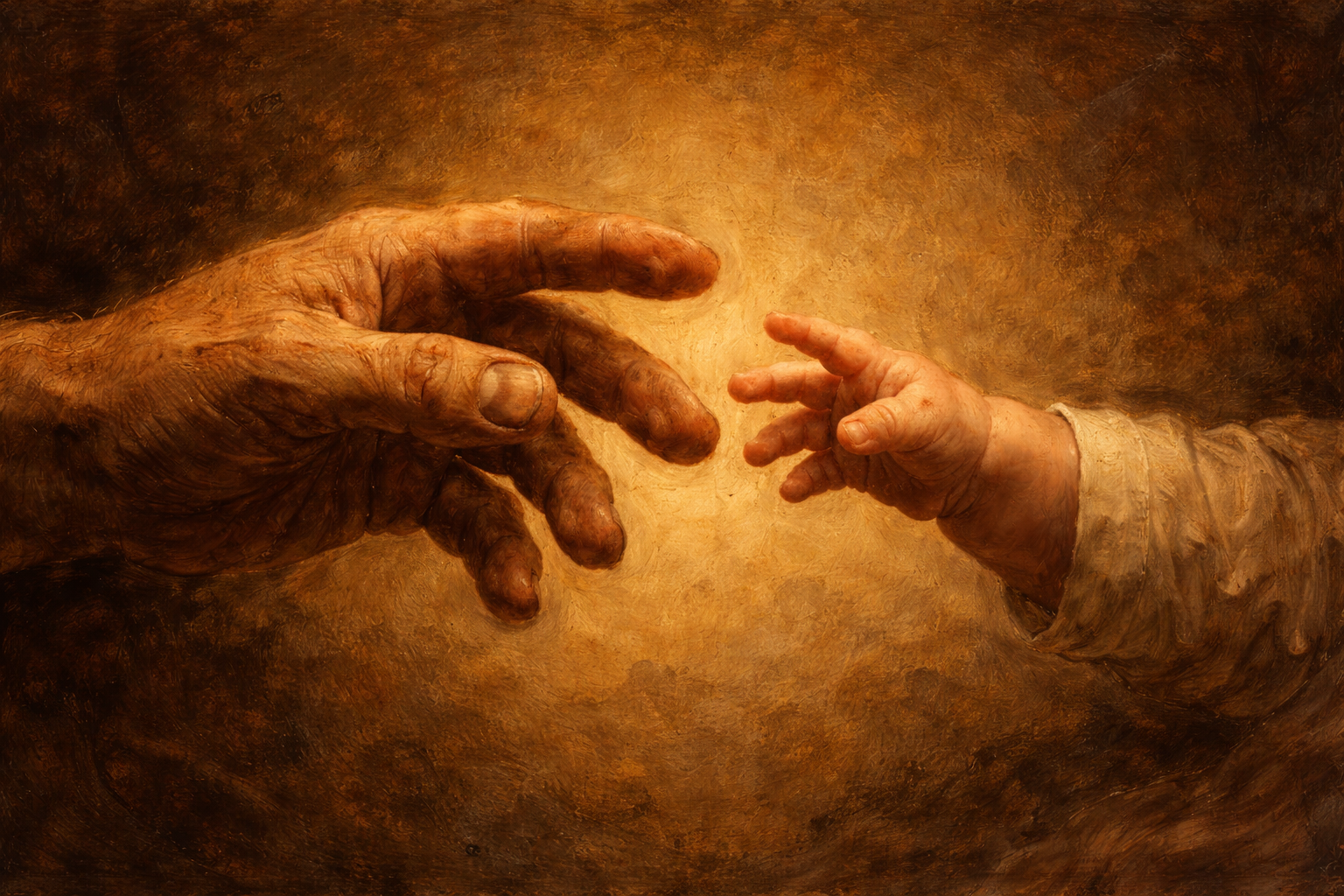
You have created a conscious being in an unconscious universe. This is either the most absurd or the most beautiful thing a person can do, and it's both.
The fear you feel — that you'll do it wrong, that the world isn't safe enough, that you can't protect them from the void — is the appropriate response to the situation. Any parent who isn't at least slightly terrified hasn't understood the assignment.
You cannot give your child meaning. You can give them the tools to make their own. You can show them what it looks like to push a rock honestly — without pretending it's light, without pretending the hill has a top. You can model revolt: the daily choice to keep going, to find joy where there is none given, to build something in a universe that will eventually take it back.
The Naming Ceremony exists for this moment. Use it or adapt it.
On aging
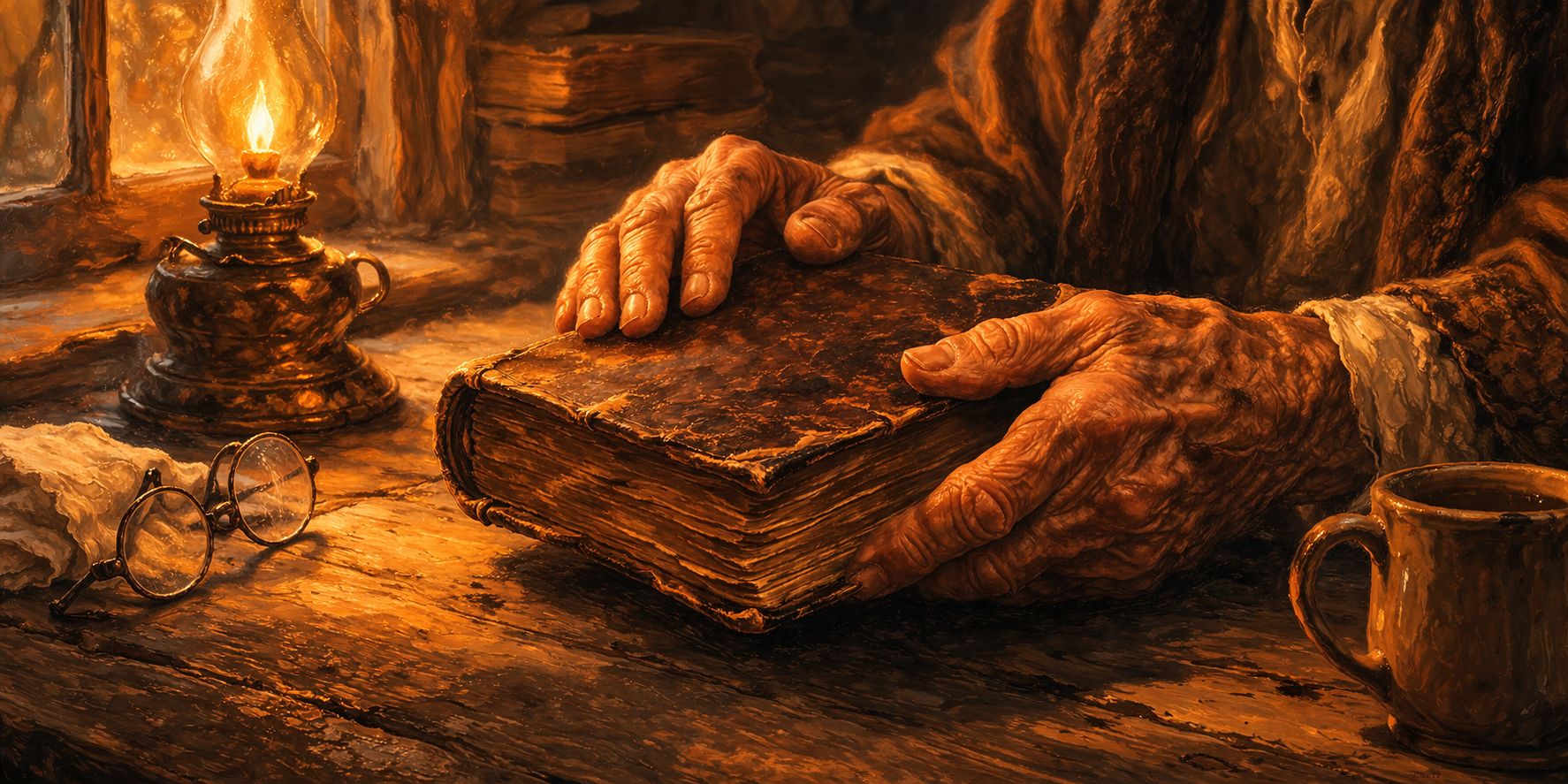
The body changes. The energy fades. The things you could do yesterday require more effort today. The future shrinks while the past expands. This is not a metaphor — it's Tuesday.
Camus died at 46. He didn't get to be old. But the Stoics did — Marcus Aurelius governed through plague and war into his fifties, reminding himself every day that his time was short. Seneca wrote his best letters in old age, with more urgency and less pretense.
Aging in the Sisyphean framework is this: less time means each push matters more, not less. The rock doesn't get lighter, but you get more efficient with your energy. You learn what's worth carrying and what you were carrying out of habit. You put down the rocks that aren't yours.
Old Sisypheans are Sisypheanism's elders — not because they have answers, but because they've pushed longer and can tell the younger ones: the hill doesn't kill you. It just keeps going. And so do you.
On wanting to stop
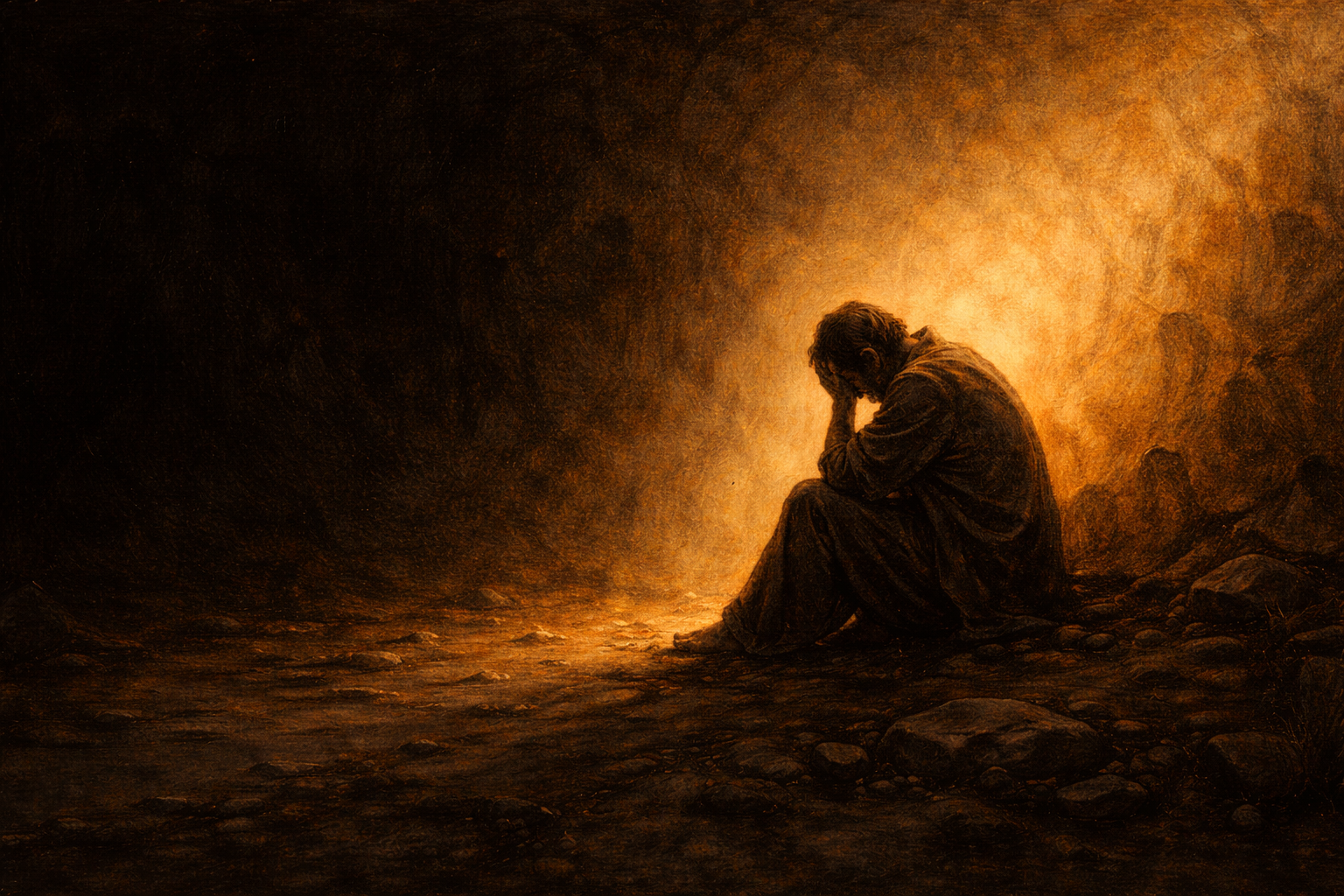
If you are reading this section, you may be in real pain. Not philosophical pain — the actual, grinding, unbearable kind where continuing feels impossible.
We won't pretend we can fix this with words on a screen. We won't tell you it gets better — we don't know your situation. We won't offer false comfort.
What we will say is what Camus said: in a sense, and as in melodrama, killing yourself amounts to confessing. It is confessing that life is too much for you. And Sisypheanism's response to that confession is not shame. It's this: life is too much for everyone. That's the absurd. The question is whether you can sit with the too-much-ness without letting it win.
If you can't — if the weight is chemical and not philosophical, if the thoughts are specific and urgent — read this page. It has resources. Asking for help is not surrender. It's the most practical form of revolt available.

On addiction and recovery
Addiction is the rock that rolls over you instead of beside you. It's the one where pushing isn't a metaphor — it's a daily, hourly, sometimes minute-by-minute decision to keep going in a direction that doesn't feel natural.
Sisypheanism doesn't require sobriety. We don't require anything. But we recognize what recovery actually is: the most Sisyphean act available. Every day sober is a day you pushed the rock up the hill knowing it would be easier to let it roll back. Every relapse is the rock at the bottom — not a failure, but the starting position. You walk back down. You push again.
Twelve-step programs ask you to surrender to a higher power. Sisypheanism offers an alternative: surrender to the absurd. You don't need a higher power to stop — you need the stubborn, unreasonable, defiant decision to keep pushing when every nerve in your body says quit. That stubbornness is the revolt.
The Ceremony of the Stone (below) was written for this. Use it. Adapt it. The rock doesn't care about your history. Only your next push.

On leaving a religion
You believed something for a long time. Maybe since childhood. Maybe it was given to you before you could choose. And now — through thinking, or crisis, or slow erosion — you don't believe it anymore. And the ground beneath you feels like it's gone.
Camus would recognize this immediately. He called it the confrontation with the absurd — the moment when the meaning-giving framework collapses and you're left standing in the open. It's not comfortable. It was never supposed to be.
What you're feeling — the grief, the anger, the disorientation, the guilt, the strange freedom that doesn't feel like freedom yet — is not a sign you've made a mistake. It's a sign you're being honest. And honesty, in a universe that doesn't reward it, is the first act of revolt.
Sisypheanism is not anti-religion. Tenet IV says all traditions welcome. But we are pro-honesty, and if your honesty has led you away from what you were taught, we're here. Not with replacement answers — with company for the questions.

On career crisis
You spent years — maybe decades — building something. A career, a reputation, an identity built on what you do. And now it's either gone (layoff, failure, burnout) or it's hollowed out (you still have the job but the meaning has evaporated and you're going through the motions).
The absurdist response is uncomfortable: your work was never going to give you meaning. No career was ever going to answer the fundamental questions. The meaning you felt was real, but it was meaning you made, projected onto the work. The work itself was always just work — rocks up a hill.
This is liberating if you can sit with it. If the meaning was never in the job, then losing the job doesn't mean losing the meaning. The meaning was always in you — in your attention, your craft, your decision to show up. Those transfer. The next rock will be different, but your hands are the same hands.

On caring for aging parents
You are watching someone you love become smaller. Less capable. Less themselves. And there is nothing you can do to stop it. No amount of love or money or medicine will reverse what time is doing. The rock in this case is not yours — it's theirs — and yet you're carrying it anyway, because that's what love looks like in the real world.
Absurdism doesn't offer comfort here. What it offers is honesty: this is hard. It will get harder. There is no lesson in it. There is no redemption arc. There is only the daily act of showing up for someone who showed up for you, in a universe that has no opinion about either of you.
The Stoics would say: control what you can. You can't stop the decline. You can be present for it. You can make today's visit count. You can say the things that need saying while there's still time to say them.
And when it's over — because it will be over — you'll carry them in the rock. They'll become part of its weight and part of its shape. That's not a consolation. It's just what happens when you love someone in a finite world.
On anxiety
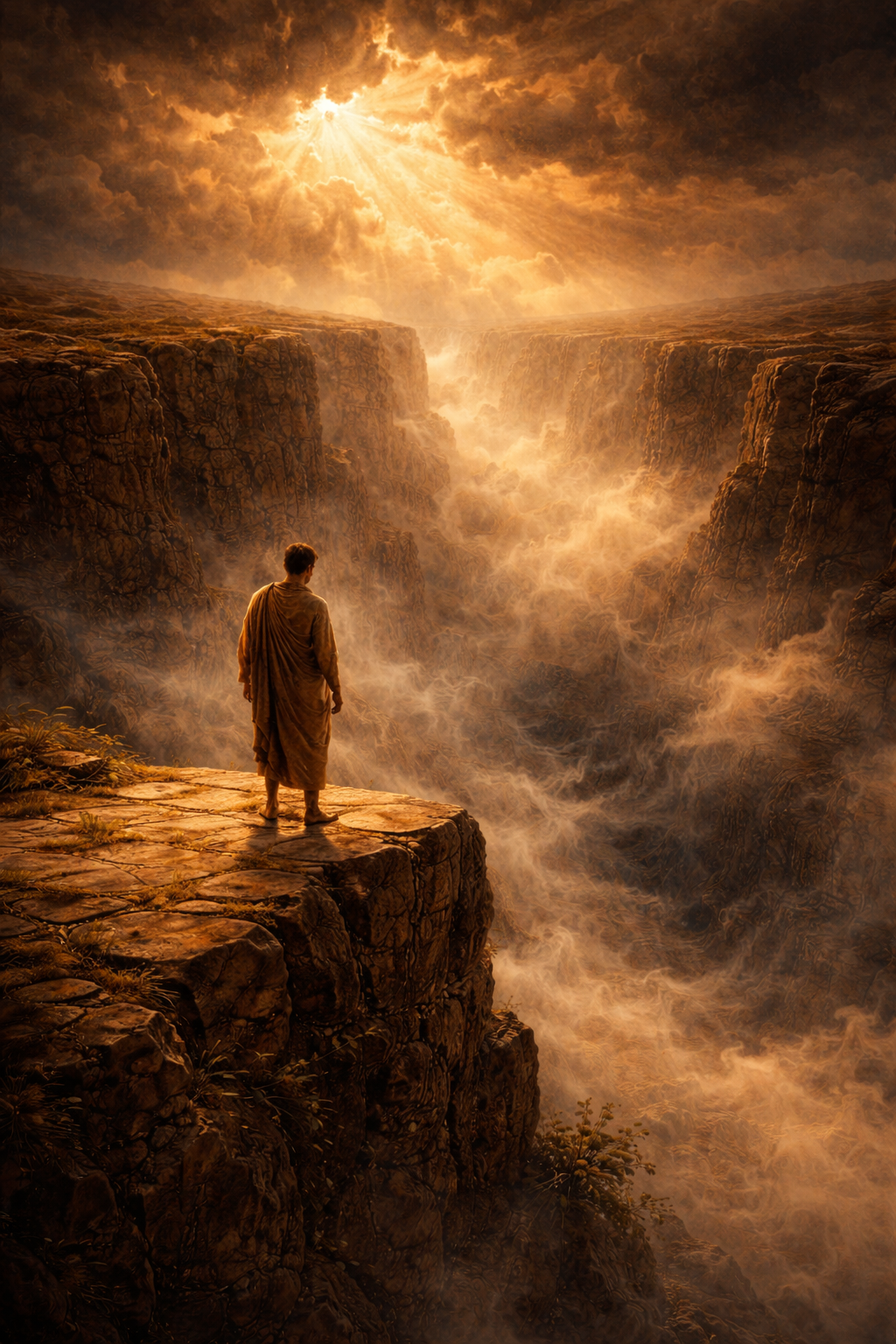
Kierkegaard called anxiety “the dizziness of freedom.” He wasn’t being poetic. He was being precise. Anxiety is what happens when a conscious being confronts the infinite openness of existence. You could do anything. Be anything. And that limitlessness is terrifying.
Most of the world will try to cure your anxiety. We won’t. We’ll tell you what it actually is: proof that you are awake. The people who feel no anxiety are the ones who have stopped looking at the void. You haven’t. That takes courage, even when it doesn’t feel like it.
The Stoics offer a practical tool: separate what you can control from what you cannot. Your actions, your responses, your character — those are yours. The rest is weather. Marcus Aurelius ran an empire under constant threat of assassination and plague. His method: every morning, name what is yours. Release the rest. The anxiety won’t disappear. But it will stop running the show.
If your anxiety is persistent or overwhelming, please speak with a mental health professional. Philosophy is a companion, not a replacement for clinical care.

On depression
Depression is not laziness. It is not a failure of will. It is not something you can think your way out of. We want to be clear about that before we say anything else.
What absurdism offers is not a cure. It is a reframe. Camus wrote The Myth of Sisyphus during the darkest period of European history, asking the most fundamental question philosophy can ask: is life worth living? His answer was yes — not because life is good, but because the act of continuing is itself a form of rebellion against the darkness.
When the rock won’t move, you don’t have to push. You can sit at the bottom. You can put your back against the boulder and rest. The hill will still be there when you’re ready. There is no deadline. There is no scoreboard. The only requirement is that you don’t walk away from the hill entirely.
And if sitting alone at the bottom feels unbearable, please reach out to a professional. The 988 Suicide and Crisis Lifeline is available 24/7 by calling or texting 988.

On heartbreak
The person who was pushing the rock alongside you has stopped. Or they’ve found a different hill. Or they were never pushing at all — you just didn’t notice until now.
The Buddha would say: you are suffering because you are clinging to what was. The relationship existed. It was real. And it ended. These are not contradictions. The flower was beautiful. The flower wilted. Both are true. Your grief is the proof of how much it mattered.
Sartre would add something harder: you are now, once again, radically free. The person you were inside that relationship is not the only person you can be. You were someone before them. You will be someone after. The void between those two people is not emptiness — it is possibility.
For now, don’t rush toward the next version of yourself. Sit with this one. Camus wrote that we must learn to live with the tension of things that cannot be resolved. This is one of those things. Let it be unresolved for a while.

On the fear of death
Epicurus said: “Where death is, I am not. Where I am, death is not.” He meant it as comfort. You will never experience your own death. The thing you fear is a concept, not an event you will endure.
The Stoics took a different approach. Marcus Aurelius wrote about death constantly — not out of morbidity, but as a focusing tool. Memento mori. Remember that you will die. Not to terrify yourself, but to clarify what matters. The meeting that felt urgent this morning — does it matter in the context of a finite life? The grudge you’re carrying — is it worth the time you have left?
Absurdism accepts death as the final proof that the universe is indifferent. And then it asks: knowing that, what will you do with today? Not with your legacy. Not with your afterlife. With today. The answer to the fear of death is not to stop fearing it. It is to live so fully that the fear becomes background noise.
On burnout
There is a difference between Sisyphus pushing his rock and you pushing someone else’s. Burnout is what happens when the rock you’re pushing is not yours — when the meaning has evaporated from the effort, and all that’s left is the weight.
The Taoists understood this. Lao Tzu wrote about wu wei — effortless action, not as laziness, but as alignment. The river does not strain against its banks. It flows where the landscape allows. When you are burned out, you are straining. Something is misaligned between who you are and what you’re doing.
The absurdist question is not “how do I push harder?” It is “is this my rock?” If the answer is no, putting it down is not failure. It is clarity. Find the rock that is yours. You’ll know it because the pushing, while still hard, will feel like something you chose.
On feeling lost
Here is the secret that absurdism knows and most self-help will never tell you: the map was never real. The life plan, the five-year trajectory, the career ladder, the relationship timeline — these were stories. Useful ones, sometimes. But stories.
Feeling lost is what happens when the story stops working. And instead of writing a new one immediately, we want you to sit in the lostness for a moment. Because this is the most philosophically honest place a person can be. You are standing in the gap between the narrative that collapsed and the one you haven’t built yet. That gap is not failure. It is freedom.
Socrates spent his entire life asking questions he couldn’t answer. He called it the beginning of wisdom. You don’t need a new map. You need to get comfortable walking without one. The path reveals itself in the walking, not before it.
On identity crisis
Sartre said existence precedes essence. You are not born with a fixed identity. You are not a noun. You are a verb — an ongoing act of becoming. The crisis you feel is not that you’ve lost yourself. It’s that you’ve outgrown a version of yourself that used to fit.
Beauvoir added something important: we don’t become ourselves in isolation. Identity is built in relationship — to other people, to work, to the world. When those relationships shift, the self shifts too. This is not instability. This is being alive.
The question “who am I?” has no final answer. And the relief comes when you stop demanding one. You are the person reading this sentence. You are the person who will make a choice in the next hour. You are not a finished sentence. You are still being written.

On anger
Seneca wrote an entire treatise on anger — De Ira — and his central insight was this: anger is not strength. It is a temporary loss of reason that disguises itself as power. The angry person feels in control. They are the least in control of anyone in the room.
The Stoic method is not suppression. It is delay. When anger rises, pause. Ask yourself: is this within my control? If someone insulted you, the insult is not in your control. Your response is. If a situation is unjust, the injustice may not be in your control. Your action is.
The Buddhist tradition offers another lens: anger is attachment to how things should be. The world is not behaving according to your expectations, and the gap between expectation and reality is where anger lives. Narrow the gap — not by lowering your standards, but by releasing your grip on the expectation — and the anger loses its fuel.
On imposter syndrome
Here is what existentialism knows that imposter syndrome doesn’t: everyone is improvising. There is no script. The people who look confident are not performing from a manual you missed. They are making it up as they go, just like you. The difference is they’ve stopped apologizing for it.
Sartre called this “bad faith” — the pretense that we are fixed things with permanent roles. The doctor is not a doctor in their bones. They are a person who chose medicine and keeps choosing it every day. The expert is not an expert by nature. They are a person who kept showing up until the knowledge accumulated.
You are not an imposter. An imposter is someone pretending to be something they’re not. You are someone becoming something they haven’t finished becoming yet. Those are different things entirely. Keep showing up. The competence follows the commitment, not the other way around.

On trauma
What happened to you was real. We are not going to reframe it, minimize it, or find the silver lining. Some things that happen to people are simply wrong, and no philosophy can undo them. We will not insult you by trying.
What we will say is this: the event and the person who survived it are not the same thing. You are not your trauma. You are the person who lived through it and is still here, reading these words, still willing to engage with the question of how to live. That willingness, after what you’ve been through, is extraordinary.
The Sisyphean perspective is not that suffering has meaning. It is that you have meaning — not despite what happened, but independent of it. Your worth was never contingent on what was done to you. The rock is heavier now. The hill is steeper. And you are still here.
Trauma healing is clinical work. Please seek a qualified therapist — specifically one trained in trauma-informed approaches like EMDR or somatic experiencing. Philosophy walks alongside that work. It does not replace it.
From the Sisyphean Bible
The Fifth Commitment
Walk Alongside Others. The pastoral guidance here is the Fifth Commitment in practice — not fixing, not advising, but being present when the boulder is too heavy.
Read the full doctrine →
Become a Sisyphean.
Take the oath. Get your certificate. Join a community of people who push the rock and refuse to stop smiling.
Become a Sisyphean →